








By Philip R. Juneau, ATC.
My previous article talked about complete commercial field
applications across multiple trades and protocols with a streamlined IP
interface to the overall building energy management system (BEMS). The good
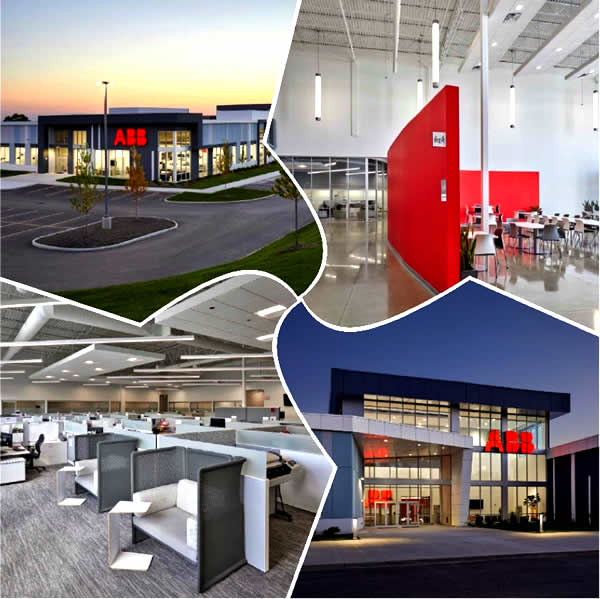
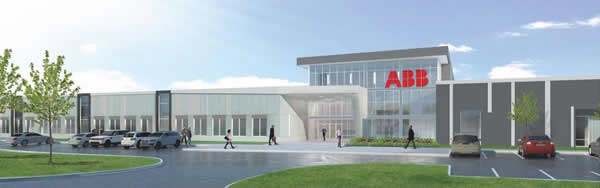
news is that we've accomplished this in a newly-installed ABB facility in
Highland Hills, Ohio.
As the HQ for ABB's market-leading Industrial Automation USA
division, this intelligent building needed to have the highest level of
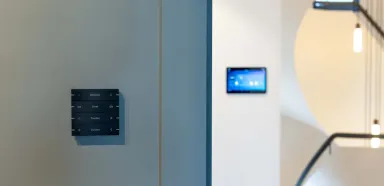
building automation available. The KNX protocol was used for all of the occupant/room
level controls including LED lighting (with DALI) and HVAC, saving material and
labour costs on wiring when compared to traditional methods. And for ease of
proactive operation and maintenance, the system can be monitored and controlled
down to the device level.
Project
overview
The project comprises 1197 KNX components, 3425 DALI interior lights, and 225 exterior lights including the parking lot and five ABB signs. For the LED lighting, the functions covered included switching, dimming, lighting scenes, constant light control, parking and perimeter lighting with geo-location from dusk to dawn. For the HVAC, we used variable air volume (VAV) box damper actuators, and electronic switch actuators.
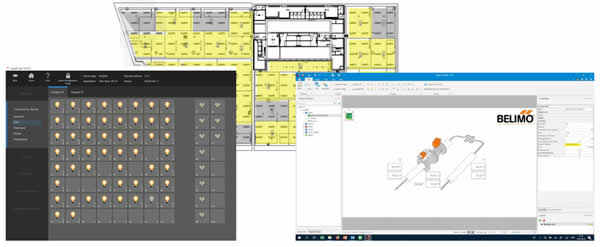
All systems are included in the supervisory (SCADA) system, namely
ATC ASCEND, with remote monitoring and diagnostics into KNX IP Secure providing
interfaces to PC, mobile phone, tablet, touch and display panels throughout the
facility. KNX provides complete field level control, making maintenance easy
and providing flexibility in terms of future use, thanks to it being integrated
into an IP convergence platform.
Streamlined
design and commissioning
As we all know, the KNX topology can include multiple KNX
lines of up to 64 devices by using an IP or KNX TP network, making it virtually
limitless. Since the HVAC VAV boxes were on the same pendant mounted 'cloud' as
the lighting, we were able connect the two applications together on one KNX
line using one room sensor, saving half on both wiring and sensors. We were
also able to pre-program the devices, thereby streamlining the implementation
down to a third of the normal effort due to reducing the technician's
configuration and commissioning time on-site.
Expandable,
proven and future-proof
With KNX-based systems, there is a guaranteed forwards and
backwards compatibility of products for extension of an existing bus network,
making it virtually future-proof. For this project, we were able to design the
system for today's modern workplace, whilst allowing for future expansion
thanks to the flexible installation and programming capabilities of KNX. In
fact, during the installation, a significant amount of re-zoning had to be done
due to unforeseen conditions; but this was no issue with the KNX field-level
backbone!
Complete
field-level protocol across all trades
As mentioned, by using KNX as a field-level protocol for
lighting and HVAC, we were able to provide a single platform and approach to
the electrical and mechanical trades. By working with the designers and installers,
we were able to reduce the complexity and effort when compared to conventional,
isolated line-voltage systems. Also, we are able to make adjustments to the
HVAC, based on the solar influence on the room and the ceiling-mounted PIR
sensor which, in addition to presence detection, measures temperature and
humidity.
Pro-active
maintenance regime
By using appropriate KNX tools, we can troubleshoot right
down to the fixture (i.e. driver) level on the DALI LED system. This means we
can determine if a fixture has a defective LED strip, driver or if there is no
power. With such a system, we were able to set up a proactive lighting failure
report on a periodic basis for the maintenance staff to stay on top of their
game. Also, we are monitoring temperature and humidity in sensitive areas in
order to alarm/notify staff for resolution.
Conclusion
We are very proud to have our very own truly intelligent
commercial building case study on KNX here in the USA. As mentioned above, KNX
has a multitude of benefits that can provide the highest level of safety,
comfort and efficiency in your building. We welcome you to come visit this
ground-breaking intelligent building, to see first-hand the interoperability
and ease of use of KNX. I'm looking forward to hearing from you all, so please
comment as your feedback is appreciated.
Philip R. Juneau is the Chief Commercial Officer for Automated Technology Company (ATC), and Vice President of the KNX USA National Group. ATC's mission is to transform today's buildings into tomorrow's net-zero infrastructure by ensuring the highest levels of safety, comfort and efficiency for the overall well-being of its occupants and the overall environment.