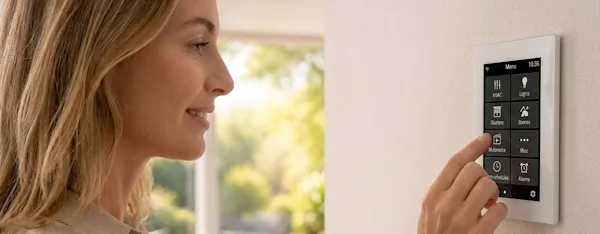










For decades, building design focused on keeping heat in. Increasingly, the challenge is keeping heat out. As summer temperatures rise across Europe, KNX professionals are uniquely positioned to help buildings stay comfortable, efficient and future-ready. A decade ago, most conversations about residential climate control centred around heating.
How do we reduce heat loss? How do we improve insulation? How do we lower energy consumption during winter? Those questions haven't gone away, but another challenge is rapidly climbing the agenda. How do we stop buildings from overheating? Across Europe, summers are becoming hotter, heatwaves are lasting longer, and homeowners are increasingly discovering that highly insulated buildings can become surprisingly uncomfortable during periods of sustained warm weather. For KNX professionals, this presents an interesting opportunity.
When energy efficiency creates a new challenge
Modern homes are remarkably efficient. Better insulation, improved glazing and tighter building envelopes have significantly reduced heating demand. These improvements have delivered enormous benefits in terms of comfort and energy efficiency. However, they have also created a new challenge. Once heat enters the building, it is often much harder to remove. Large areas of glazing can create substantial solar gains. South-facing rooms can quickly become uncomfortable. Home offices, bedrooms and living spaces may remain warm long after the outdoor temperature begins to fall. Many homeowners respond by turning on cooling systems.While effective, cooling is often treating the symptom rather than the cause.
The best cooling strategy is often not cooling at all
One of the most valuable conversations KNX professionals can have with customers is about preventing heat from entering the building in the first place.
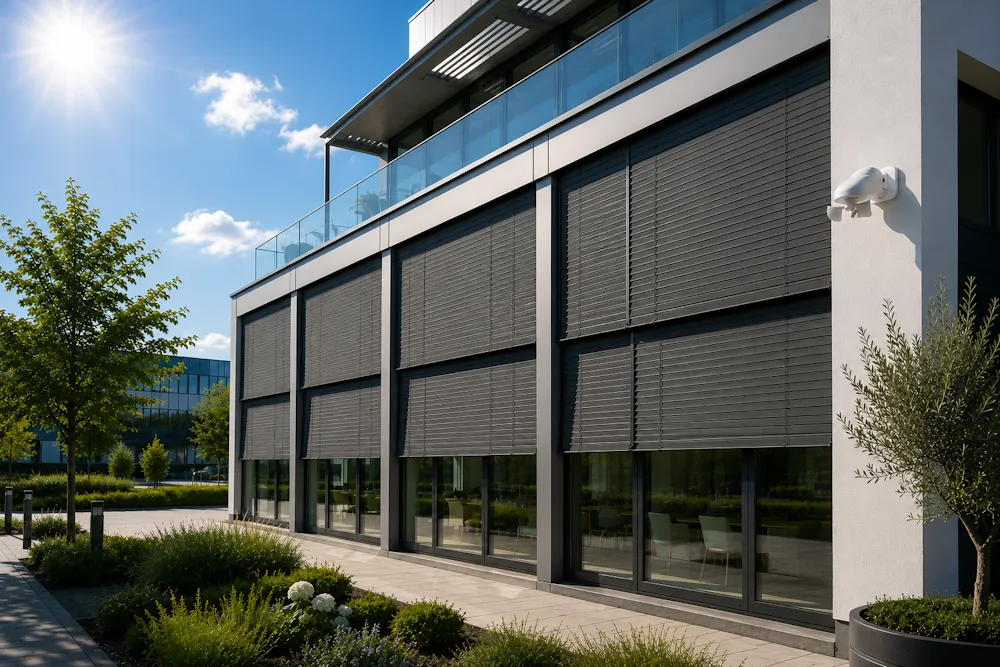
External shading remains one of the most effective tools available. It is a simple principle. If sunlight is prevented from reaching the glass, much of the associated heat never enters the building. Compare this to cooling systems, which must first remove heat that has already accumulated inside. From an energy perspective, prevention is usually more efficient than correction. This is where automation becomes particularly valuable.
The challenge with manual shading
Most homeowners understand the purpose of blinds and shutters. The reality, however, is that they are often operated inconsistently. A blind left open before leaving for work may allow hours of solar gain into a room. By the time the homeowner returns, the temperature may already be uncomfortable. The building had an opportunity to respond, but nobody was there to make the decision. KNX changes that equation. Rather than relying on manual operation, shading systems can respond automatically to sunlight intensity, outdoor temperature and occupancy patterns. The building reacts to conditions in real time.
Weather stations and Sun Position Tracking
Weather stations have long been a staple of many KNX projects. Historically, they were often specified to support basic blind control and wind protection functions. Today, their role is becoming more strategic. By providing information about sunlight levels, outdoor temperature, wind speed and weather conditions, they allow the building to make more informed decisions. Furthermore, advanced KNX weather stations and modern shutter actuators allow for precise Sun Position Tracking, sometimes referred to as slat tracking. By calculating the sun's azimuth and elevation based on geographic location, date and time, the system can automatically adjust the angle of blind louvres throughout the day. This blocks direct solar radiation whilst still allowing useful natural daylight into the room, helping to prevent spaces from becoming dark and enclosed.
A façade exposed to strong afternoon sun may require a different shading strategy from one facing east. Automated blinds can lower before overheating occurs and retract when conditions improve, creating a building that remains comfortable while making better use of available energy.
Night cooling and natural ventilation
Summer comfort is not only about what happens during the day. Increasingly, KNX professionals are integrating strategies that take advantage of cooler night-time temperatures to flush out heat. Automated windows, controlled ventilation systems and intelligent scheduling can help remove accumulated heat from the building during the evening and overnight hours. This process cools the building's thermal mass — the concrete, floors and walls — effectively using it as a form of passive cooling storage that can absorb heat during the following day. By the following morning, indoor temperatures may already be significantly lower, reducing the need for mechanical cooling later in the day. Again, the objective is not simply to cool the building; it is to manage heat intelligently.
Heat pumps and safe cooling
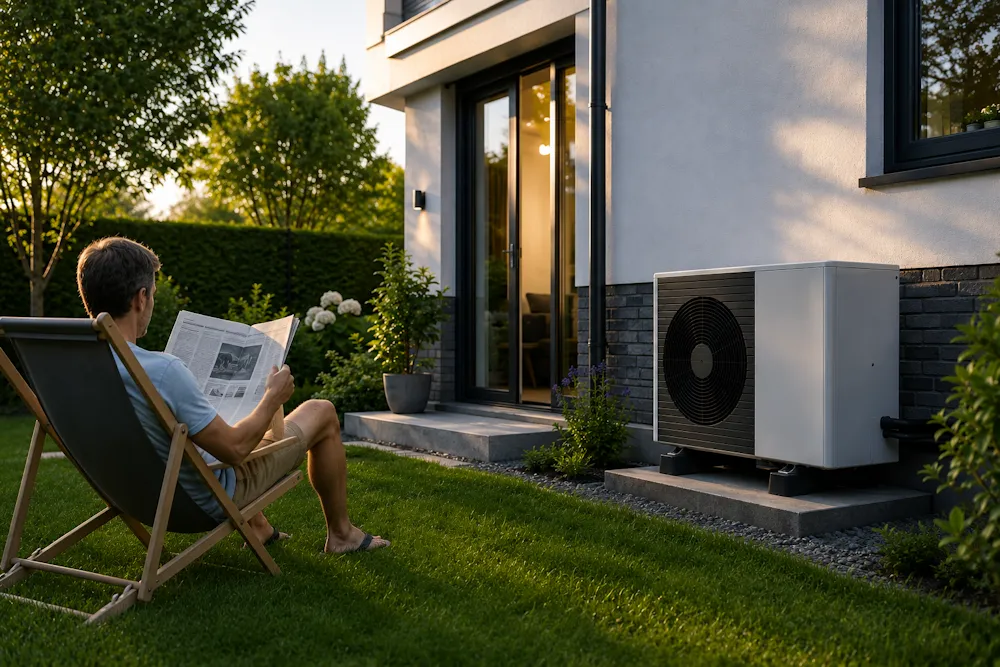
Heat pumps are becoming increasingly common in both residential and commercial projects. While much of the discussion focuses on heating performance, many systems also provide cooling functionality. This creates new opportunities for integration, but it also requires careful coordination. When a heat pump or cooling system circulates cooled water through underfloor pipework, there is a very real danger of condensation forming on cold surfaces. This is where the power of a unified KNX system becomes clear. By utilising KNX room controllers equipped with relative humidity sensors, the system can continuously calculate the dew point. If humidity rises or floor temperatures drop too low, KNX can automatically adjust cooling valves or increase the heat pump's flow temperature before moisture forms on the floors. Rather than operating as standalone systems, heat pumps can work safely alongside shading controls, weather information and occupancy data. Cooling can be prioritised only where it is needed, when it delivers genuine benefit, and entirely within safe operating limits.
A building performance issue
Perhaps the most important point is that overheating should not be viewed solely as a comfort issue. It is increasingly becoming a building performance issue.
Architects, consultants, developers and homeowners are all looking for ways to create buildings that remain comfortable under changing climate conditions while maintaining energy efficiency. This requires more than individual products operating in isolation. It requires systems working together.
Conclusion
The conversation around energy efficiency is evolving. For many years, the focus was on keeping heat inside the building. Increasingly, the challenge is preventing unwanted heat from entering in the first place. Automated shading, sun tracking, weather monitoring, night ventilation and intelligent, dew-point-protected cooling strategies all have an important role to play. By connecting these functions through a single open platform, KNX enables buildings to respond dynamically to changing conditions and maintain comfort throughout the summer months. For KNX professionals, this represents more than a seasonal challenge. It is an opportunity to demonstrate how automation can improve building performance, reduce energy consumption and create more comfortable spaces for the people who use them. As summers continue to change, that capability is only going to become more important.