








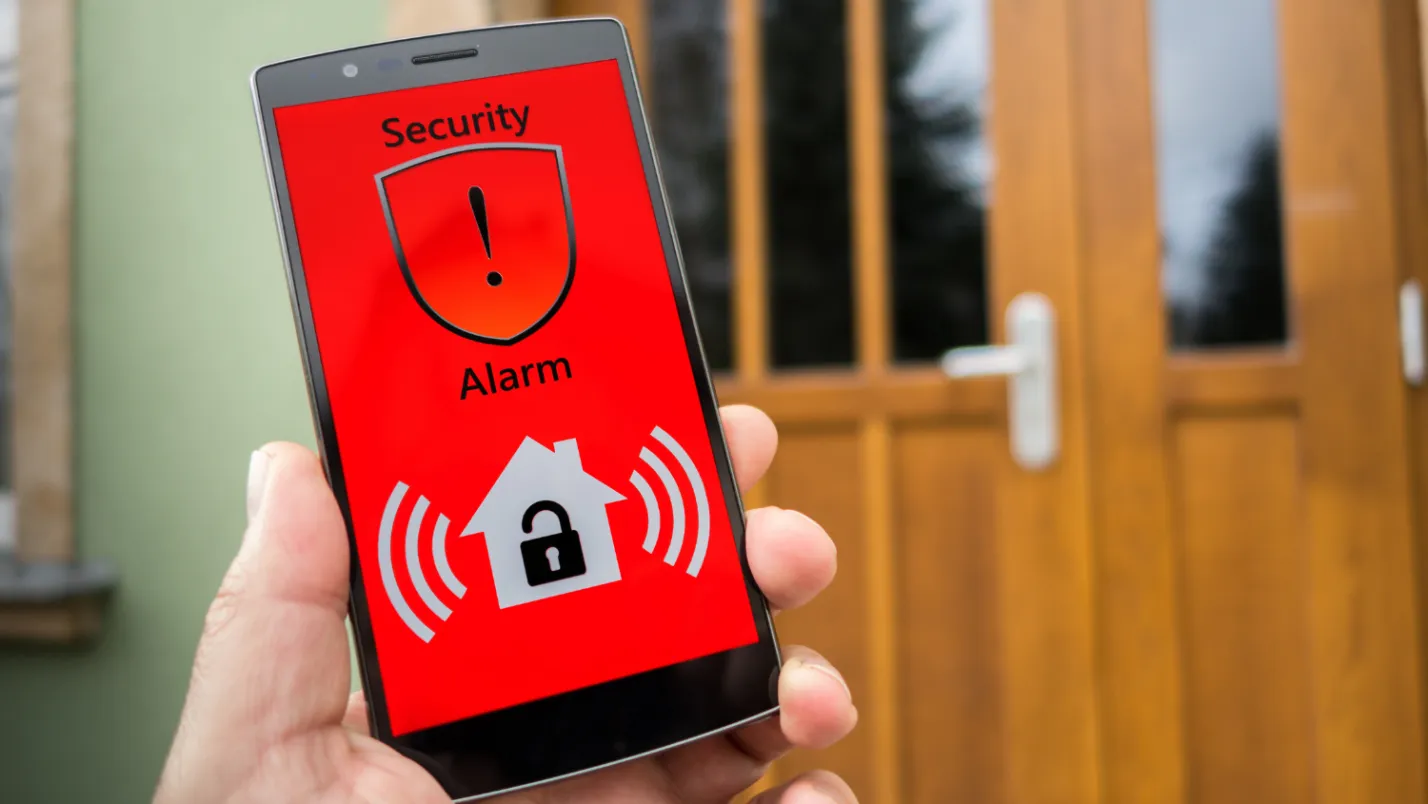
Coming home after dark, walking down an unlit garden path or wondering whether you've left the outdoor lights on overnight: these are everyday situations where a small sensor can make a noticeable difference.
A passive infrared (PIR) sensor detects changes in infrared radiation (heat) as a person or animal moves through its detection area. Depending on how it's configured, it can switch on a light, trigger a notification, or activate other smart home functions. In a home equipped with KNX technology, an outdoor PIR sensor can do more than control a single light. KNX connects smart home devices from different manufacturers, allowing them to work together. This means the same movement detection can trigger several useful functions around your home.
If you're wondering which sensor is right for your home, our guide to [choosing the right outdoor PIR sensor] covers the practical details. Here, we'll look at what adding one can do for your everyday life.
Lighting your way home
|
Image

|
Outdoor motion lighting is often associated with deterring unwanted visitors. But one of its most useful benefits is much simpler: being able to see where you're going. Imagine arriving home with your hands full of shopping. Instead of searching for a light switch or walking up a dark driveway, the entrance lighting switches on as you approach. The same applies to garden paths, steps and side entrances, where good lighting makes moving around outside more comfortable. Passing animals, nearby traffic or environmental conditions |
can occasionally trigger an outdoor PIR sensor.Your installer can help reduce unwanted activations by choosing a suitable position and adjusting the sensor's settings.
Lighting up overlooked areas
|
Image
|
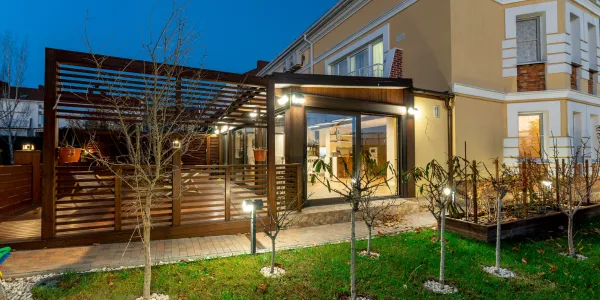
Not every corner of a property needs a camera pointed at it. A side passage, garden gate or the space behind a shed might simply benefit from better lighting when someone passes through. An outdoor PIR sensor isn't a substitute for a dedicated intrusion alarm system. Its main job is to detect movement, which can then trigger lighting or other configured functions. |
It doesn't record images or tell you who is there, but it can light up these spots when it matters, without leaving the lights on continuously. This makes motion-controlled lighting a useful complement to security cameras. Cameras can provide visual information where it's needed, while PIR-triggered lighting can help illuminate other areas when movement is detected.
Using outdoor lighting only when needed
|
Image
|
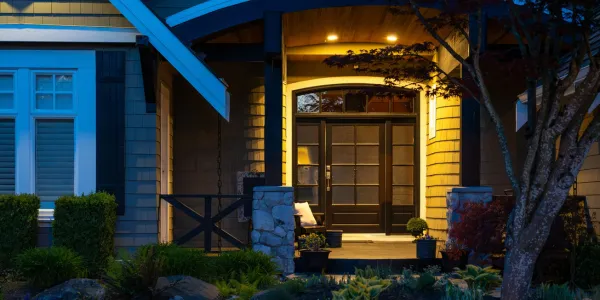
Outdoor lights are sometimes left on longer than necessary, whether they're controlled by a timer or a switch that's easy to forget. Motion-controlled lighting offers an alternative: the lights can switch on when movement is detected and switch off again after a chosen period without further detection.That means your entrance, driveway or garden path can be illuminated when someone needs it, without necessarily keeping the lights on throughout the evening or overnight. Combined with energy-efficient LED lighting and the right brightness settings, this can help reduce unnecessary electricity use. |
With suitable daylight sensing, your installer can also configure the lights to respond to movement only when it's dark enough to need them. The actual energy savings depend on how often the lights are activated, their power consumption and how they were controlled before. But the principle is straightforward: use lighting when it's useful rather than leaving it on unnecessarily.
One sensor, more possibilities
A standalone motion light is designed mainly to control its own lighting. A PIR sensor integrated into a KNX installation can make the same movement detection available to other parts of your smart home. For example, movement near your driveway could switch on the entrance and pathway lights together. A sensor at a side entrance could activate several outdoor lighting zones, helping you move around the property without searching for switches. Depending on your KNX setup, the same detection could also trigger a notification or activate a scene, such as switching on the porch light and the hallway lights together. Some systems can record events, allowing you to check when movement was detected.
That's where KNX offers something beyond a conventional motion light. One sensor can contribute to several coordinated functions, without needing a separate motion detector for each one.
Small sensor, smarter outdoor lighting
An outdoor PIR sensor isn't a single-purpose gadget once it's part of a KNX system. It can light your way when you arrive after dark, bring light to less-used areas and help avoid leaving outdoor lights on longer than necessary. When connected to KNX, it can also become part of a wider smart home setup, allowing different lighting zones and other compatible functions to respond together. A certified KNX professional can help you choose a suitable outdoor PIR sensor and configure it around your home's layout, your daily routines and the functions that matter most to you.